Tarsar Marsar Trek
The gentler twin-lake sibling of the Great Lakes.
Explore
Seven days, seven alpine lakes, three high passes — widely called the most beautiful trek in India. Sonamarg to Naranag, across the roof of Kashmir.
The Trek
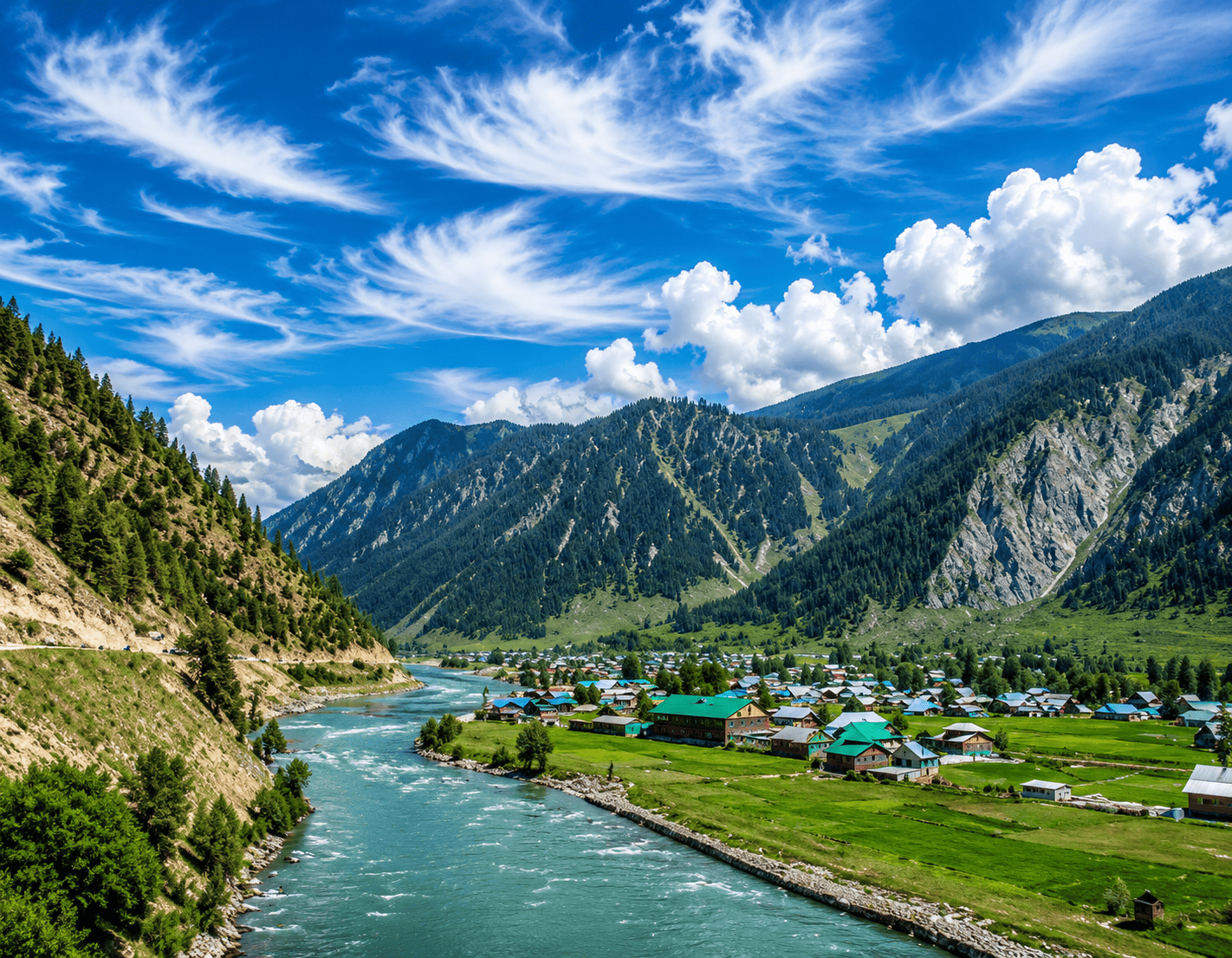
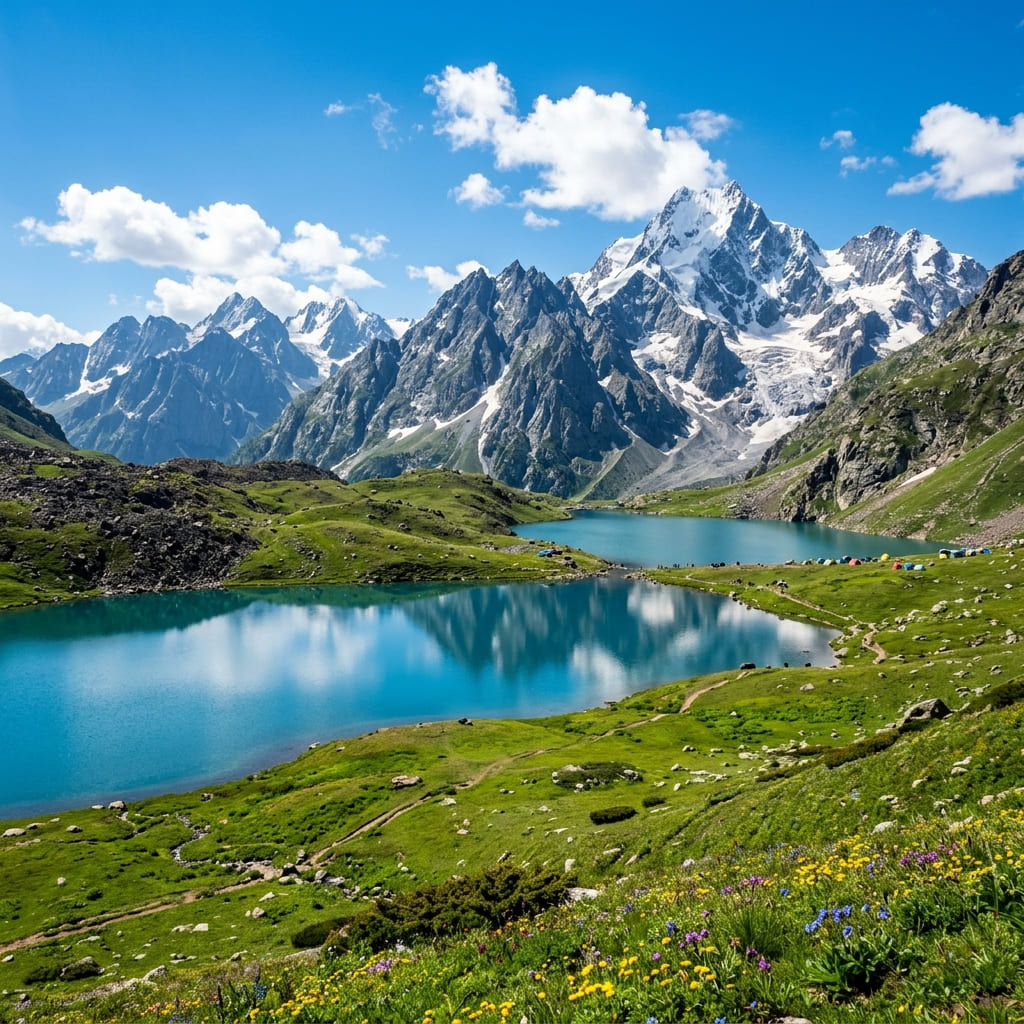
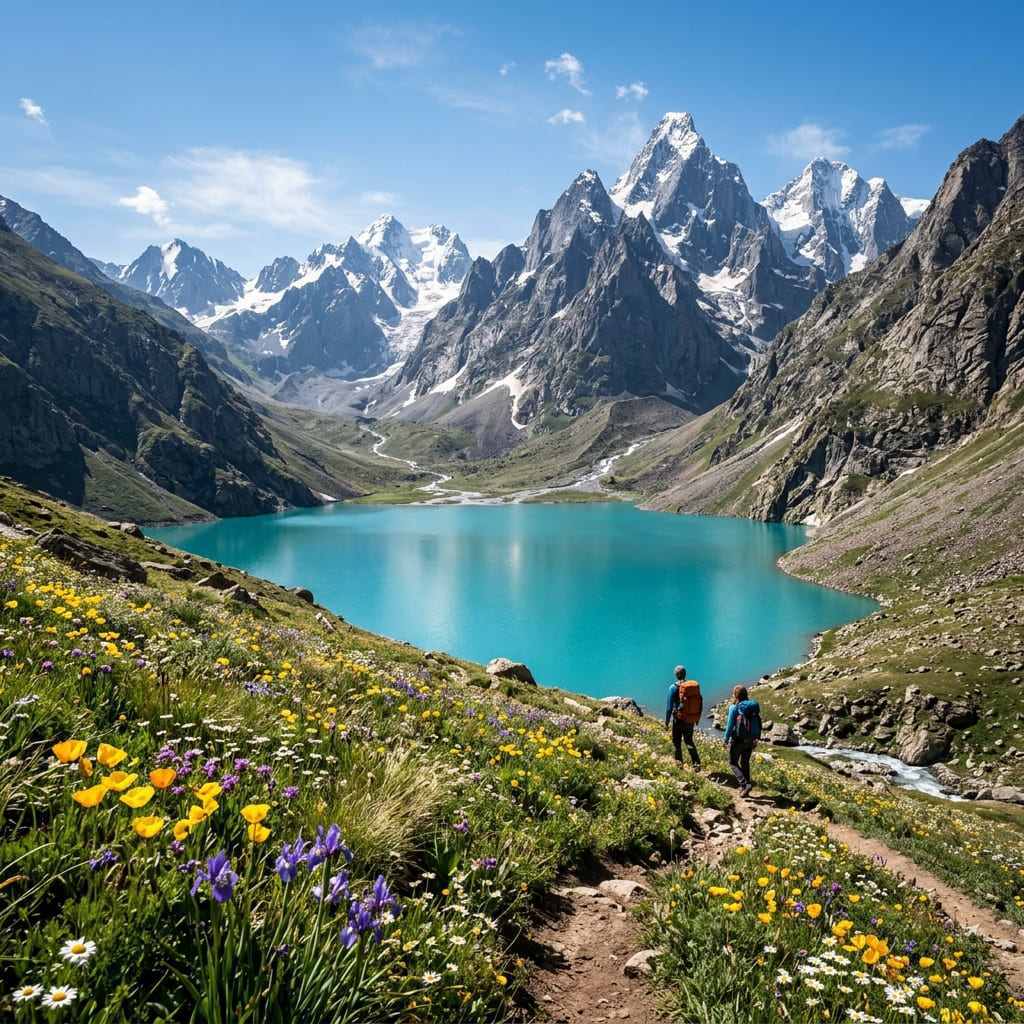
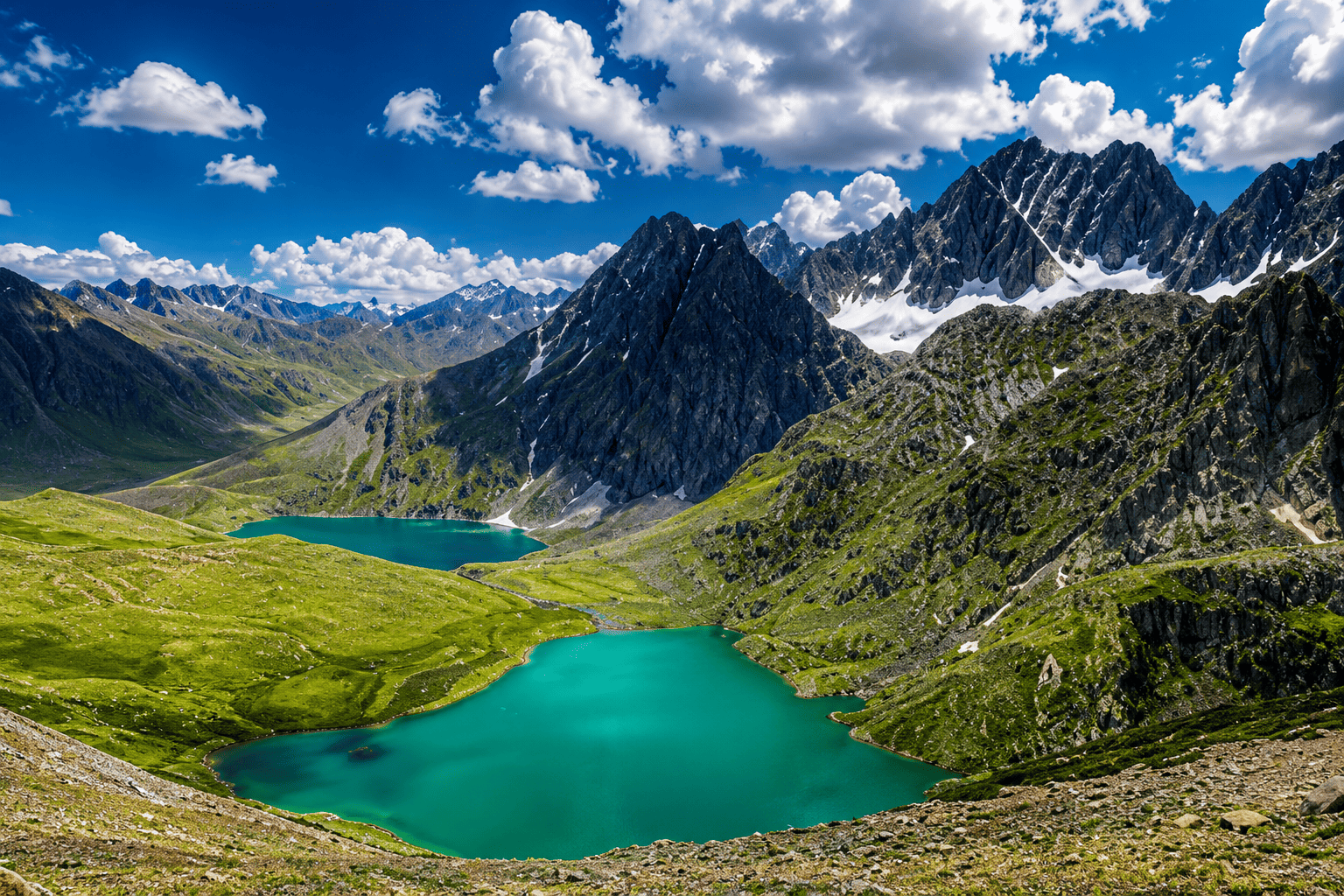
From the pine meadows of Sonamarg to the sacred twin lakes below Mount Harmukh, the Great Lakes trail strings together the finest alpine scenery in the Kashmir Himalaya. Each pass reveals a new valley; each valley cradles its own impossibly coloured lake.
This is our flagship summer expedition — fully supported with experienced local guides, a camp crew, and pack ponies so you carry only a daypack. All you bring is a reasonable level of fitness and a camera you won't be able to put down.
₹18,500 / person · fixed departures Jul–Sep
Book This TripDay by Day
Meet at Srinagar, transfer to Sonamarg (2,800 m) through the Sindh valley. Kit check, briefing and a night beside the river to settle in.
A steady climb out of the pines onto open shepherd meadows, camping below Nichnai at around 3,500 m as the treeline falls away behind you.
Cross the Nichnai Pass (4,100 m) and descend to camp beside the deep-blue Vishansar Lake, framed by snow-streaked ridges.
The trek's high point at 4,200 m, with Vishansar and Kishansar glittering below, then down past the 'lake of flowers' to camp at Gadsar.
A gentler day through frontier meadows to the seven small lakes of Satsar — braided water, grazing horses and huge skies.
Boulder ridges and a final climb open onto Gangbal and Nundkol beneath the pyramid of Mount Harmukh (5,142 m) — the trek's grand finale.
A long, beautiful descent through pine forest to the ancient temple ruins of Naranag, then transfer back to Srinagar.
Why You'll Love It
Vishansar, Kishansar, Gadsar, Satsar, Gangbal and Nundkol — turquoise water beneath 5,000 m peaks.
July carpets the valleys in wildflowers; grazing horses and shepherd camps complete the picture.
Warm tents, hot Kashmiri meals, unlimited kahwa and a crew that makes altitude feel effortless.
The Fine Print
The Route
Distances and positions are illustrative. Your trek leader carries GPS tracks, and a detailed day-by-day map pack is shared with every confirmed booking.
Fitness & Preparation
This is a moderate-to-challenging trek. You'll cover 70+ km over seven days and cross three passes above 4,000 m. If you can comfortably walk 12–14 km with a daypack over uneven ground, you're ready.
Start preparing three to four weeks out: brisk walks or jogs, stair climbing and a few hikes with a loaded daypack build the stamina that turns a hard day into a happy one. Our guides set a steady, sustainable pace and never leave anyone behind.
Weather & Best Season
The trek runs early July to mid-September, when the passes are snow-free and the meadows bloom. July brings wildflowers and full lakes; September brings crisp, clear light and thinner crowds.
Expect pleasant days of 15–20°C and cold nights near freezing at the high camps. Afternoon showers are common in July — we build the day's schedule around the morning weather window.
Pack Smart
Ponies carry the group kit — you carry a daypack with the essentials. Here's the short list.
Good to Know
It is a moderate-to-challenging trek. You cover 70+ km over seven days with three passes above 4,000 m. Comfortable fitness — the ability to walk 12–14 km with a daypack over undulating terrain — is enough with a few weeks of preparation.
The highest point is Gadsar Pass at roughly 4,200 m. Camps are always set lower than the day's high point to aid acclimatisation.
Early July to mid-September, when the passes are clear of snow and the meadows are in full bloom. July offers wildflowers; September offers crisp golden light.
Seven or more, depending on the route and side-trips — Vishansar, Kishansar, Gadsar, Satsar, Gangbal and Nundkol, plus smaller unnamed tarns along the way.
Yes. Groups are led by certified local guides with a support crew, and we host many solo and women travellers every season with dedicated tents on request.
July and August fill months ahead — reserve your Great Lakes dates today.